
Improve the mechanical properties of your corrugated base paper
Separate, thicken and refine the fine particle fraction: the solution to declining mechanical properties
- Optimisation of the corrugated base paper recycling process (ClipIndus process)
- Improvement in mechanical properties by 15–20% whilst maintaining the same basis weight
- Maintenance of mechanical properties whilst reducing the basis weight
- Reduction in the consumption of chemicals (sizing starch, press starch, etc.)
Generate Value...
Improving the mechanical properties of corrugated base paper is a key challenge in ensuring the performance of corrugated board packaging. However, increasingly high recycling rates lead to a gradual deterioration in the mechanical properties of the fibres and, consequently, of the paper. To compensate for these losses, manufacturers often resort to additives such as starch or an increase in basis weight, which has an impact on production costs.
The ClipIndus process, developed by CTP, enables a 15–20% increase in mechanical properties whilst maintaining the same basis weight, by acting on the fine fibre fraction through a combination of fractionation, thickening and targeted refining of just 20–30% of the initial fibre suspension.
Adopting ClipIndus means standing out from your competitors by producing stronger or lighter papers, whilst keeping your operating costs under control. It also ensures that your products remain among the highest-performing grades listed in the CEPI Containerboard classification.
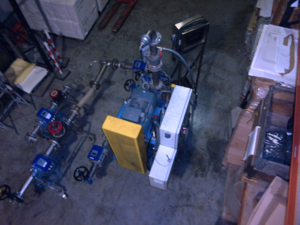 Principle of the fractionation unit
Context and performance
The CTP offers semi-industrial-scale trials at its pilot plant to demonstrate the proof of concept for your production objectives, prior to full-scale industrial implementation. The trial is carried out using your industrial pulp suspension in order to replicate your production conditions as closely as possible and to accurately assess the potential benefits.
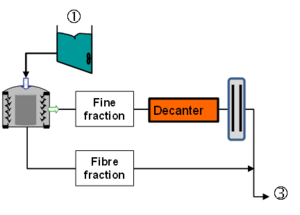 Flowchart of the ClipIndus process
Content of services
The CTP uses the equipment in its semi-industrial facility (micro-hole fractionator and refiner). The thickening of fine particles is carried out either by settling or in collaboration with an equipment supplier that has a centrifugal decanter.
Manufacturers wishing to carry out tests at the CTP supply the pulp to be optimised and discuss their performance improvement objectives with the experts in order to determine the operating conditions best suited to their fibre suspension.
The CTP can also carry out technical and economic simulations to assess the viability of the industrial investment in line with the site’s objectives: equipment sizing, throughput, energy requirements…
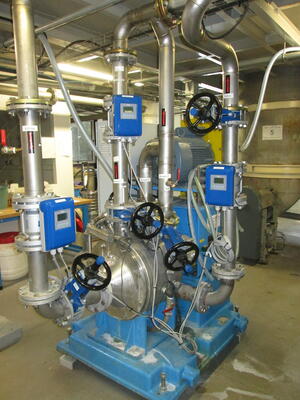 μ-hole fractionator
Delivrables
The test report provided by the CTP details:
- the operating conditions used (μ-hole fractionation, thickening of the fine fraction, refining conditions)
- the gains achieved through the process combining fractionation and refining applied to the fine fraction.
The calculation of economic performance takes into account the investment required to install ClipIndus on site, and the productivity targets specific to each facility.